Loading…
Teaching or studying this?
All lesson plans
Lesson planC160 minsReviewed. Reviewed: checked by a teacher, as well as our automatic checks for level, grammar, facts and originality.
Get On Like a House on Fire: Idioms about making and keeping friends
Describe how a friendship began and how it has lasted or faded, using idioms naturally, in a magazine feature on making friends in a new city.
Idioms · Friendship · Relationships
Or download everything as a ZIP (4 PDFs)This lesson plan and its PDFs are free.
Plan at a glance
Main aim
Describe how a friendship began and how it has lasted or faded, using idioms naturally, in a magazine feature on making friends in a new city.
Sub-aims
- Learn nine idioms for how a friendship begins (break the ice, hit it off, get on like a house on fire, on the same wavelength) and how it lasts or fades (see eye to eye, go back a long way, through thick and thin, drift apart, lose touch)
- Notice the meaning differences that matter: drift apart (less close) or lose touch (no contact), with no argument in either; see eye to eye on or about something, often negative; break the ice at a first meeting or after a silence
- Notice the form: the fixed words (a long way, thick and thin) and the subject (We go back a long way; I lost touch with her)
- Read four readers' stories in a magazine feature for detail and attitude, matching statements to the readers
- Speak in pairs: compare two friendships and decide which is more likely to last; write a reader's story (180–240 words)
Stages · 60 min
- 5 minLead-in: Ex. 1
- 10 minVocabulary: Ex. 2
- 5 minLanguage focus: Go through the grammar notes: who the subject is (we go back a long way), the small words (see eye to eye on, lose touch with) and drift apart or lose touch.
- 5 minControlled practice: Ex. 3
- 10 minSpeaking: Ex. 4
- 10 minReading: Ex. 5
- 15 minWriting: Ex. 6
Printables
Click a page to preview it, download it or open it in a new tab.
Download all (ZIP, 4 PDFs)Grammar notes
Who is the subject?
- go back a long way, get on like a house on fire and drift apart usually have both people as the subject: Sami and I go back a long way; We drifted apart.
- hit it off and lose touch can also take with + one person: I hit it off with Grace; I lost touch with my old team.
The small words
- see eye to eye on or about something (often negative): We don't see eye to eye on money. lose touch with, keep in touch with someone.
What they imply
- drift apart: you slowly become less close, and may still be in contact. lose touch: the contact stops. Neither needs an argument; after an argument, people fall out.
- break the ice: at a first meeting, or to end an awkward silence; the subject can be a person or a thing (A quiz broke the ice).
- Register: these idioms are informal or neutral, natural in conversation, stories and magazines.
Study tips
- Learn each idiom with its subject and its small words: we go back a long way; lose touch with someone; see eye to eye on something.
Glossary
- Getting on4 items
- Staying close, or not5 items
- Other useful words6 items
Self-study PDF
Prefer paper? Print the lesson and check your own work.
- Every exercise to print and do on paper
- The answers at the back, to check your own work
- Why each answer is right, and model answers for the writing
Download the self-study PDF9 pages · free with an account
Practise on your own
Try Study mode
The exercises below as a course of short levels, like a learning app: the easiest way to practise on your own.
- One question at a timeBig buttons and no scrolling, on a phone, tablet or computer.
- Instant feedbackThe answer straight away, and why where it helps.
- GraduateWrong answers come back until you get every one right.
- Your progress is keptLevels you finish show here too, and in your account when you're signed in.
Level 2 · Which idiom fits?
At the first meeting of a walking group for newcomers, nobody spoke. Then Ade _____ by asking everyone about their worst ever holiday.
hit it offbroke the ice
Check
Level 7 · Revise: still close, or not?
We don't see eye to eye on politics, but I'd trust her with anything.
still closenot close any more
Right!
ContinueLevel 3 graduated!
Get the words right
9 / 9
every answer right
Next level
Scan to open Study mode on your phone
Complete the exercises, then check your answers.
Study mode: just this exercise
As a class
Where do adults meet the friends they're closest to? Do a quick class survey and find out.
- 1On your own, think of two friends you're close to now. Where did you meet each of them: at school or university, at work, as neighbours, through a club or a hobby, through other friends, or online?
- 2Ask three or four people in the class where they met two close friends, and ask one more question each: How long have you known them? Are you still as close as you were?
- 3As a class, put the places in order, from the most common to the least. Then think: what did you want to say about how a friendship began or changed, but didn't have the words for?
Useful language: reporting what you learnt
- Most people…
- Fewer people…
- Overall,…
- The main finding is that…
Teacher's note: Keep it light and quick: students only say where they met a friend, and nobody has to talk about a friendship they'd rather keep private (a friend from a film or an invented one is fine). Write the places on the board as students report. Listen for the plain words they use (we became friends quickly, we don't talk any more): the lesson gives them idioms for these, and they write about a friendship in ex. 6.
One-to-oneAsk the student the survey questions, then answer them yourself; compare your answers with the class results you'd expect (Do most people meet friends at work?).
Larger groupsIn a large class, students survey only their row or table; each group reports its top place, and the class compares.
Study mode: just this exercise
Each situation is about people who are new in a city. Choose the idiom that fits best.
- a
At the first meeting of a walking group for newcomers, nobody spoke. Then Ade ___ by asking everyone about their worst ever holiday.
- b
Lisa met her new neighbour at the recycling bins last week. They chatted for an hour and swapped numbers: they ___ straight away.
- c
Within a fortnight of joining the choir, Bilal and Joe were cooking for each other and messaging every evening. They ___.
- d
Hana likes her new flatmate, but they don't ___ about the heating: Hana is always cold, and her flatmate is always hot.
- e
Rob moved here in May. He and his new colleague Tom don't always agree, but each of them knows how the other thinks without a long explanation. They ___.
- f
Nadia moved here for work, but she still talks every week to Kofi, whom she met on their first day at primary school, forty years ago. Nadia says: 'We ___.'
- g
Since Sophie moved, she and her school friend still message each other on birthdays, but they have less and less to talk about. They've ___.
- h
Ali and his old colleagues were good friends, but he changed his number when he moved and forgot to tell them. Now none of them can contact him. They've ___.
Talk: Which pair of idioms was the hardest to tell apart? Explain the difference to a partner in your own words.
Study mode: just this exercise
Each idiom has one word missing. Write the missing word.
- a
Kai and I go back a long : we shared a desk at school.
- b
After the move, I lost touch most of my old team.
- c
A quiz about our home towns helped to break the at the welcome evening.
- d
My neighbour and I hit it on the day I moved in.
- e
Ella and her new flatmate got on like a house on .
- f
Within minutes, Gus and I realised we were on the same .
- g
Dami and I are close, but we don't see eye to eye money.
- h
Her oldest friend has stood by her through thick and .
- i
Without a reason to meet, Leon and his old flatmates slowly drifted .
Talk: Compare with a partner. Which idioms usually have both people as the subject (We go back a long way), and which can take with + one person (I lost touch with her)?
Study mode: just this exercise
Rememberbreak the icehit it offget on like a house on fireon the same wavelengthsee eye to eyego back a long waythrough thick and thindrift apartlose touch
In pairs
Describe two friendships to your partner: an old one and a newer one. Your partner decides which one is more likely to last, and why.
- 1Plan for two minutes. Choose a friend you've known for years and one you met more recently (yours, or invented ones). Note how you met, what you have in common and how often you're in touch.
- 2Student A: describe and compare the two friendships, using at least four idioms from the lesson. Student B: listen and note the idioms you hear.
- 3Student B: say which friendship you think is more likely to last, and why. Student A: say whether you agree. Then change roles.
Language for this taskWe go back a long way.We don't see eye to eye on…We've drifted apart since…I lost touch with… when…
Useful language: comparing
- Both… and…
- … is similar to…
- … is different from…
- whereas…
Teacher's note: Give planning time, and let students describe invented friendships or friendships from a film if they prefer. While they speak, note uses of the small words (see eye to eye on, lose touch with) and of the subject (We go back a long way, not I go back a long way to her). In feedback, ask two or three listeners which friendship they chose and why, then look at a few mistakes together.
One-to-oneDescribe two friendships of your own first, so the student hears the idioms in use and decides; then the student describes theirs, and you decide and give your reason.
Larger groupsIn groups of three, one student describes, and the other two each choose the friendship more likely to last; if they disagree, they must persuade each other.
Study mode: just this exercise
Read four readers' stories from a city magazine. Which reader says each thing? You can choose a reader more than once.
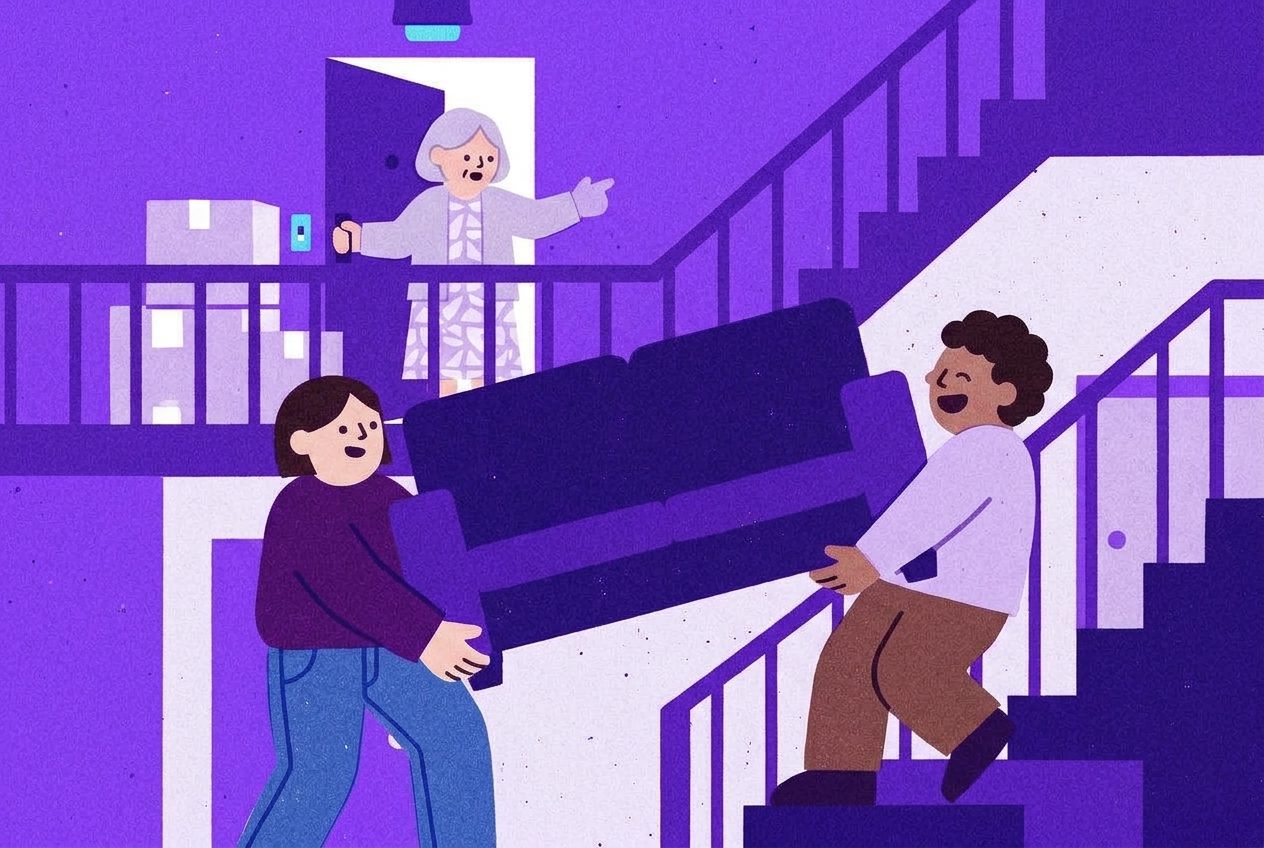
Moving to a new city as an adult can be lonely: everyone else seems to have their friends already. We asked four readers how they made a close friend here, and what happened to the friends they left behind. A Joanna, 41, nurse I didn't know a soul when I arrived, and after night shifts I was too tired to go anywhere. In the end, it was my washing machine that changed things. It leaked one morning, and water came through the ceiling of the flat below. I went down to apologise, expecting my neighbour to be furious, but Grace broke the ice by asking whether I'd been trying to fill a swimming pool. We hit it off at once, and we've had Sunday lunch together ever since. My friends back home have been lovely, but I've had to accept that we're drifting apart. Nobody has done anything wrong: their lives are there, and mine is here now. B Femi, 29, software tester In my first year, I decided to make an effort: a climbing wall, a choir, a board-games night. Everyone was friendly, but nobody became more than a familiar face. Then a colleague, Ruth, asked if I'd help her carry a sofa up four flights of stairs. We got on like a house on fire, and by the evening we'd booked a trip to the coast. We don't see eye to eye on everything (she thinks my taste in music is a crime), but teasing each other about it is half the fun. C Tariq, 52, bus driver People say it's harder to make friends at my age, and I think they're right. My closest friend is still Sami, from home. We go back a long way: we sat next to each other at school, and he has stood by me through thick and thin, including the year I was out of work. We speak every Sunday, and the distance hasn't changed a thing. Here, it took me two years to find someone I felt at ease with. Pat is a retired librarian, twenty years older than me, so on paper we have nothing in common. In practice, we're on the same wavelength about almost everything, from gardening to terrible jokes. D Mei, 24, graduate trainee When I moved here, I promised my university friends that I'd keep in touch. I meant it, but settling in took all my energy: a new job, a new flat, a flatmate I hardly saw. I'd read a message, plan to answer it at the weekend, and then forget. Within a year, I'd lost touch with nearly all of them, and that's my one real regret about the move. What helped here was a language exchange, where I met Lucía. We weren't close at first, but we both kept turning up every week, and the friendship grew slowly. Last month, I finally sent a long message to my old group. Two of them have already replied.
Tap an item, then its match…
…then its match
Talk: Which reader's experience is closest to yours, or to that of someone you know? What would you tell a friend who has just moved to a new city?
Study mode: just this exercise
Write a reader's story for the magazine (180–240 words).
The magazine wants more readers' stories for New in town. Write about a friend who made a place feel like home: a new city, a new job or a new course (real or invented). Say how you met and how the friendship began, why it works, and what has happened to an older friendship: has it lasted, or has it faded? Use at least five idioms from the lesson. Word box: break the ice · hit it off · get on like a house on fire · on the same wavelength · see eye to eye · go back a long way · through thick and thin · drift apart · lose touch · keep in touch · settle in Look back at ex. 1. Where did people in the class meet their closest friends? What can you say now about how a friendship began and how it has lasted or faded?
Suggested minimum: 180 words
Useful language: linking ideas
- Although…,…
- However,…
- As well as that,…
- On the other hand,…
0 words · aim for at least 180
One-to-onePlan the story together in three parts (how you met, why it works, the older friendship), then the student writes; read it with them and check the idioms and the small words (with, on).
Larger groupsStudents plan in pairs and write alone; then groups of three read each other's stories and choose one for the magazine, saying which idioms made it work.
Show a model answer
I moved here three years ago for a job in a hotel kitchen, and for the first few months I spoke to almost nobody outside work. Everything changed at a pottery class I had booked on a whim. The teacher put us in pairs, and my partner, Wanjiru, broke the ice by showing me the very lopsided bowl she had made the week before. We hit it off at once. Although she is fifteen years older than me and grew up on another continent, we're on the same wavelength about most things, from cooking to what makes a good film. We don't see eye to eye on football, but that just gives us something to laugh about over dinner. The friendship has also made me think about my old ones. My best friend from school and I go back a long way, and she has been there for me through thick and thin. We still speak every week, and nothing important has changed. However, I've drifted apart from most of the people I used to go out with at home. Nobody did anything wrong: we simply have different lives now. I've lost touch with a few of them completely, and I've decided that's all right. As well as that, I've learnt that one good friend can make a new city feel like home.
Continued practice
Optional extra practice, not part of the lesson: for fast finishers, homework or another class.
Study mode: just this exercise
Is each friendship still close? Put each sentence in the right group.
- a
We don't see eye to eye on politics, but I'd trust her with anything.
- b
We hit it off at university, but I haven't heard from him for years.
- c
We've been through thick and thin together, and we still speak every week.
- d
Since she moved abroad, we've slowly drifted apart.
- e
We go back a long way, but these days we only send birthday messages.
- f
We're on the same wavelength, so we never run out of things to talk about.
- g
I lost touch with my first flatmate when I changed my number.
- h
We got on like a house on fire from the start, and we still do.
Study mode: just this exercise
Ask someone about a friendship, then describe it (80–120 words).
Ask someone you know (a friend, a relative or a colleague) about their oldest friend: how they met, what keeps them close, or why they've drifted apart. Then describe the friendship, with at least three idioms from the lesson, and say why you think it has lasted or faded.
Suggested minimum: 80 words
Useful language: giving reasons
- One reason is that…
- This is mainly because…
- because of…
0 words · aim for at least 80
Spotted a mistake in this lesson?· tell us the exercise and item
Revise with a game
This lesson's own words and questions. Play on your own, or in teams on the classroom screen.
- Step UpAnswer the lesson's questions to climb to the top.
- Pair UpMatch the lesson's words to their meanings against the clock.
- SnapCards turn over, a word then a meaning: Snap when they go together.
- Fix ItNot available for this lesson. Fix It needs at least 5 sentences with a mistake (from "correct the mistake" or "choose the correct sentence" exercises), and this lesson has fewer.
- Quiz BoardTeams choose questions worth 100 to 500 points.
- Retro arcadeWord Invaders, Word Snake, Word Maze and Word Crossing: classic arcade games with the lesson's words.
Glossary
The 15 words and phrases this lesson teaches, in 3 sets.
Getting on
- break the ice
- to say or do something that helps people relax when they first meet, or after a silence
- At the welcome evening, a quiz about our home towns broke the ice.
- hit it off
- to like each other as soon as you meet
- Mo and his new neighbour hit it off over the garden fence.
- get on like a house on fireinformal
- to like each other and become friendly very quickly
- Two weeks after the move, Sara and her flatmate were getting on like a house on fire.
- on the same wavelength
- thinking in a similar way and understanding each other easily
- My new colleague and I are on the same wavelength: we laugh at the same things.
Staying close, or not
- see eye to eye
- to agree with someone about something; often used in the negative, with on or about
- Bea and her flatmate don't see eye to eye on how tidy the kitchen should be.
- go back a long way
- to have known each other for a long time (the subject is both people)
- Noor and I go back a long way: our mothers met at the hospital where we were born.
- through thick and thin
- in good times and in bad times
- My brother's best friend has been there for him through thick and thin.
- drift apart
- to slowly become less close, usually without an argument
- Once we lived in different cities, my old neighbour and I drifted apart.
- lose touch
- to stop being in contact with someone (lose touch with someone)
- When I changed jobs, I lost touch with most of my old team.
Other useful words
- lonely
- unhappy because you are alone or have no friends
- In her first winter in the city, Zara often felt lonely at the weekends.
- settle in
- to start to feel comfortable and happy in a new home, job or place
- It took Ayo about six months to settle in after the move.
- make an effort
- to try hard to do something
- Kemal made an effort to learn all his neighbours' names.
- a familiar face
- someone you know by sight and say hello to, but don't really know
- At the gym, Leo was a familiar face, but nobody knew his name.
- keep in touch
- to continue communicating with someone (keep in touch with someone)
- We keep in touch with a video call once a month.
- flatmate
- a person you share a flat with
How was this lesson plan?
One tap helps other teachers find the best lessons, and helps us improve them.